
2021
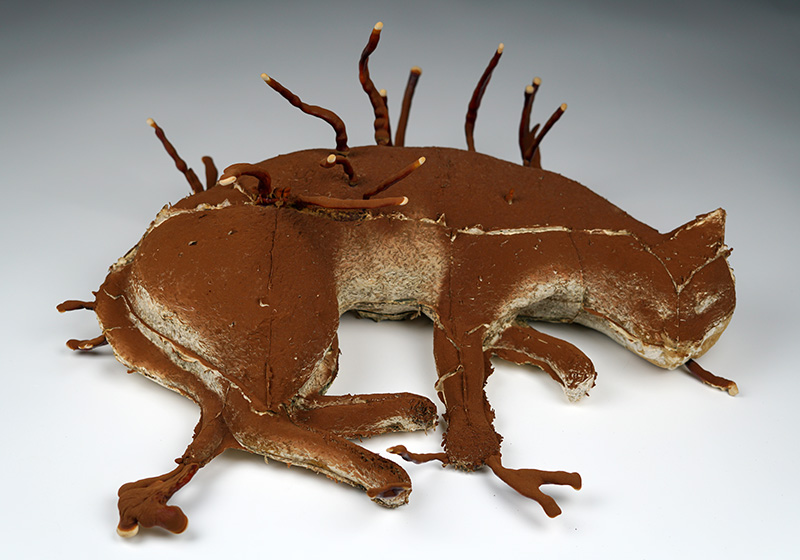
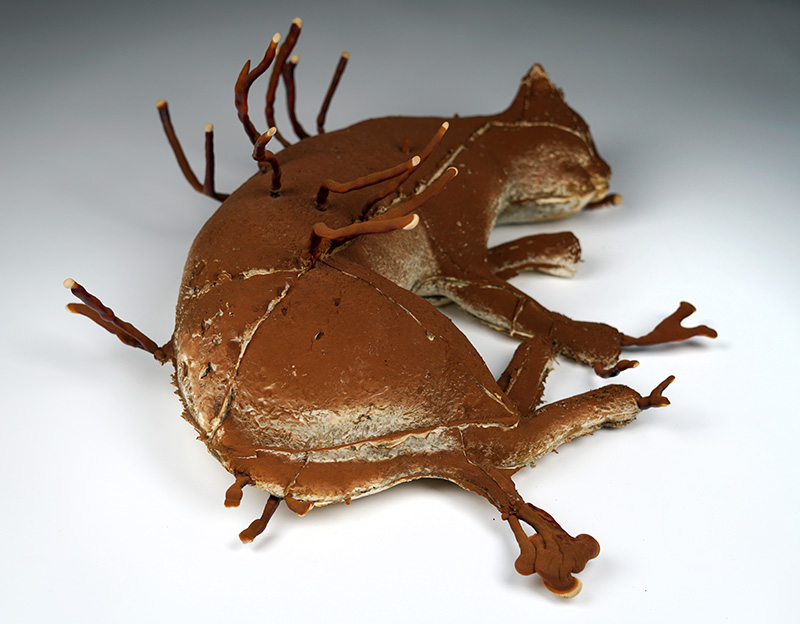
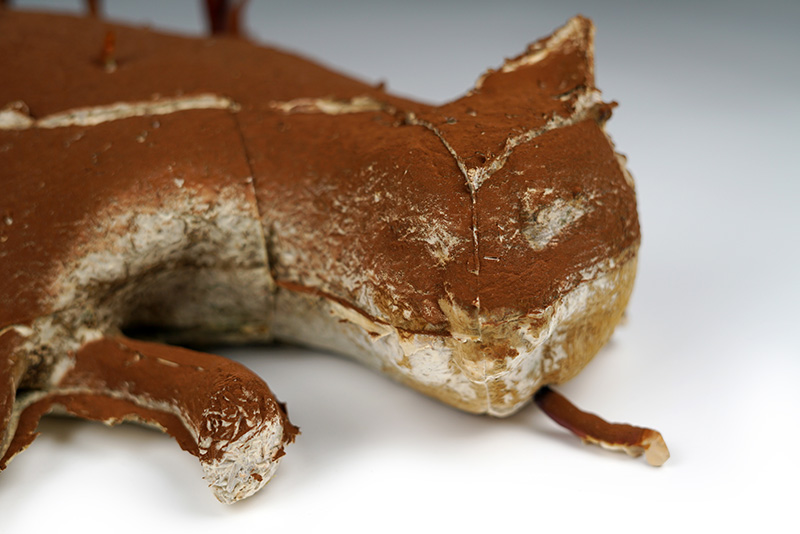
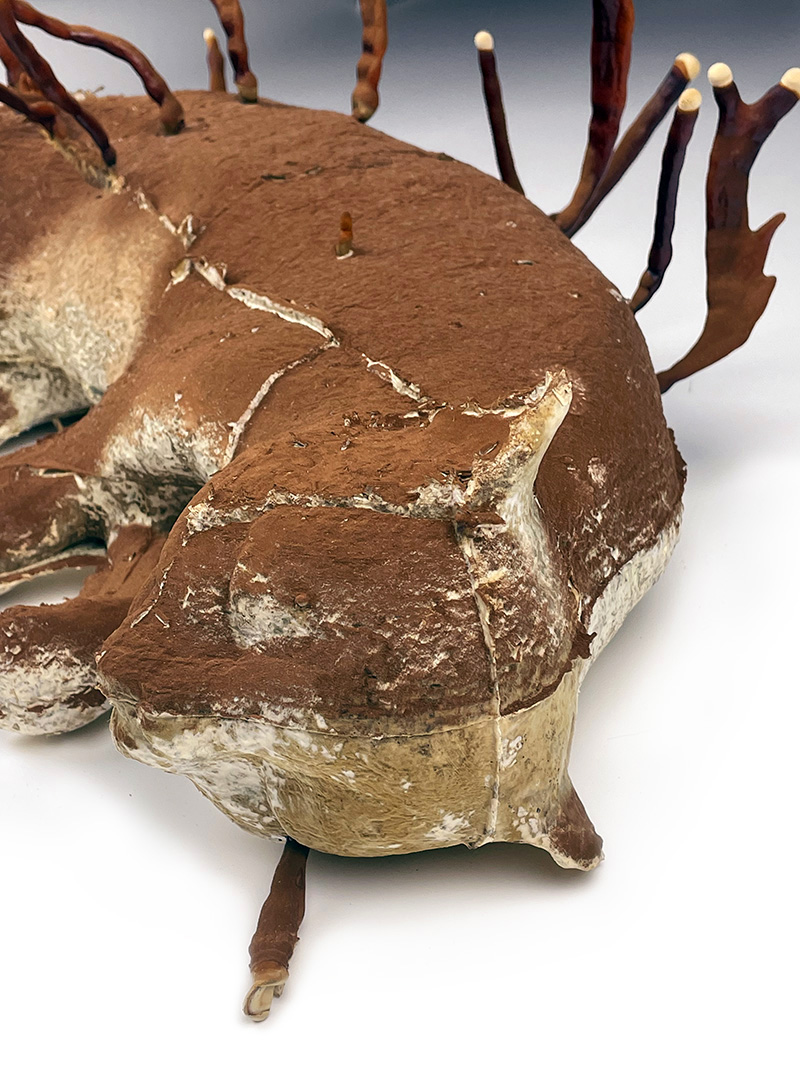
Mycelium, cultivated lingzhi mushrooms and wood chips
This sculpture continues my investigation into cultivated fungi as sculptural collaborators, extending the work into a more complex negotiation between anatomical form and biological growth. The subject derives from the sleeping posture of my cat, a body at rest, suspended between vitality and stillness. That threshold condition becomes the structural premise of the work.
Rendering this transient posture in living mycelium required adapting the cultivation process to a more intricate morphology. The mold had to register subtle curves and hollows while maintaining conditions suitable for colonization. Growth could not be imposed; it had to be guided. The mycelium binds the wood-chip substrate through its own metabolic logic, while the lingzhi fruiting bodies emerge in response to environmental cues, integrating with the form as both organism and surface.
The work stages a tension between biological autonomy and sculptural containment. Mycelium is simultaneously generative and destabilizing, capable of binding structure while continually seeking expansion. Preserving the integrity of the sleeping figure demanded a balance between constraint and allowance, between directing growth and yielding to it.
In this sense, the sculpture is less a fixed representation than a record of ecological negotiation. The themes of mortality, rest, and healing are not illustrated symbolically but enacted materially. The fragile anatomy of a resting body becomes inseparable from the living processes that shaped it. What stands before the viewer is both image and evidence: a momentary equilibrium within an ongoing cycle of growth, decay, and renewal.