
2012
Medium:paper, natural reed, shadow
Dimension:dimensions variable
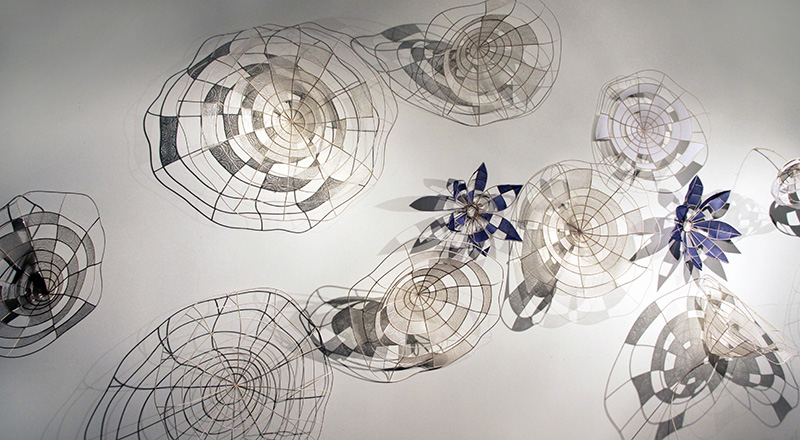
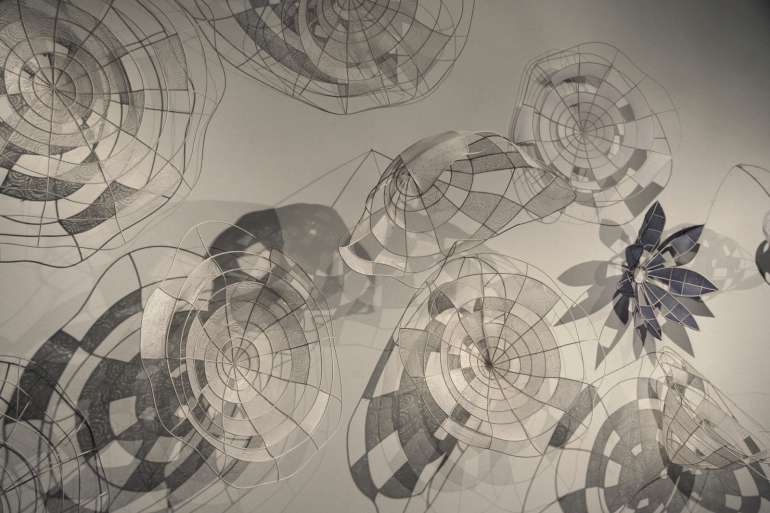
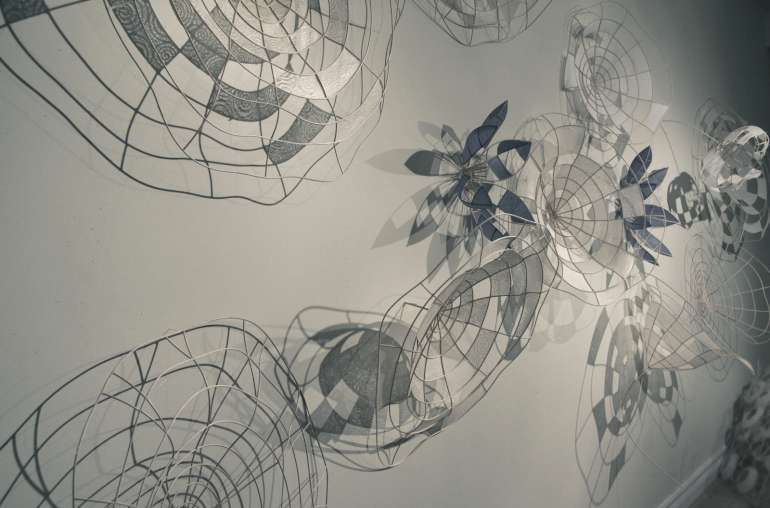
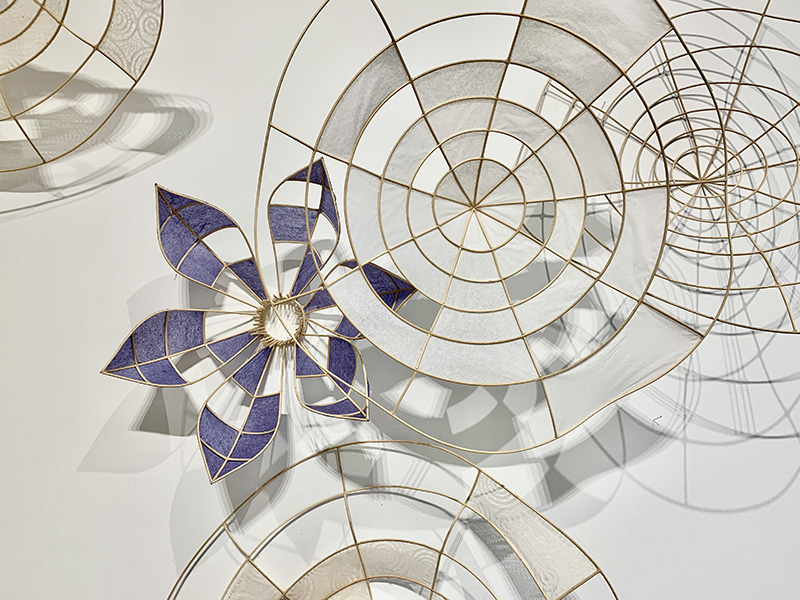
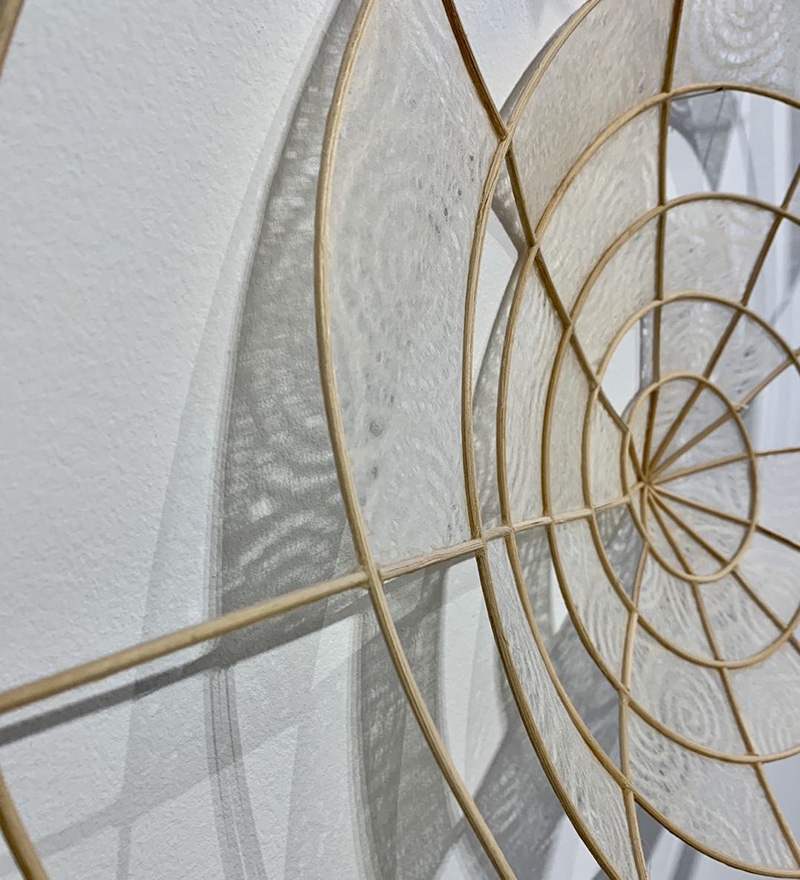
A quiet choreography of reed and paper unfolds across the wall, capturing the moment a breath of wind unsettles still water. Each reed, gathered from the riverbank, is bent back into the arc of its former growth and laced with hand-cut paper skins. The spiraling discs hover like lily pads, while their shadows gather beneath them, forming a second, intangible pond. What appears as surface gesture is the trace of movement, tension, and balance.
The installation stages a dialogue between organic material and human intervention. Reeds, shaped by water and time, meet paper, a refined and processed fiber. Together they construct a space that is neither wholly natural nor wholly fabricated. The work rests within that threshold, where environmental forces and human design continually negotiate form.
Within Chinese thought, the lotus is associated with the junzi 君子( gentleman), the cultivated person who rises “from the mud yet remains unstained.” That idea of integrity emerging from complexity informs the work, not as illustration but as structure. Purity is not separation from environment, but a condition that arises within entanglement.
The fragility of the installation is intentional. Its delicacy mirrors wetland ecologies shaped by subtle shifts in wind and water. Light and shadow double each element, suggesting that every visible form is accompanied by an unseen counterpart. In the Pond invites viewers to slow their perception, to notice how disturbance, reflection, and stillness coexist. It is less a meditation on purity than an inquiry into balance: how systems absorb disruption, and how integrity can persist within flux.